Cheating in 2026 is no longer about copying answers. It is about handing over the process of learning itself to AI. A student can use AI to brainstorm an essay, write the thesis, produce a first draft, add citations, and polish the final version. Newer tools can even make that work look like it was typed naturally over time.
The biggest academic integrity problem today is not just AI-generated writing. It is the process cheating behind it. Students skip the brainstorming, drafting, revising, and healthy struggle they are supposed to learn from.
TL;DR
- Modern cheating fakes the process of learning, not just the final product.
- Some tools can fake a realistic edit history. Document history alone is no longer solid evidence.
- A free first step: a 20-minute writing session in class, early in the term, changes the whole semester.
Cheating changed because schoolwork changed
Students now do most of their schoolwork online and they can ask AI to do their thinking for them.
The question is no longer whether AI was used. The better question is: what part did the student actually play in creating this work? Tools like Process Feedback exist to help answer that question. But before we get to solutions, it helps to see what teachers are up against.
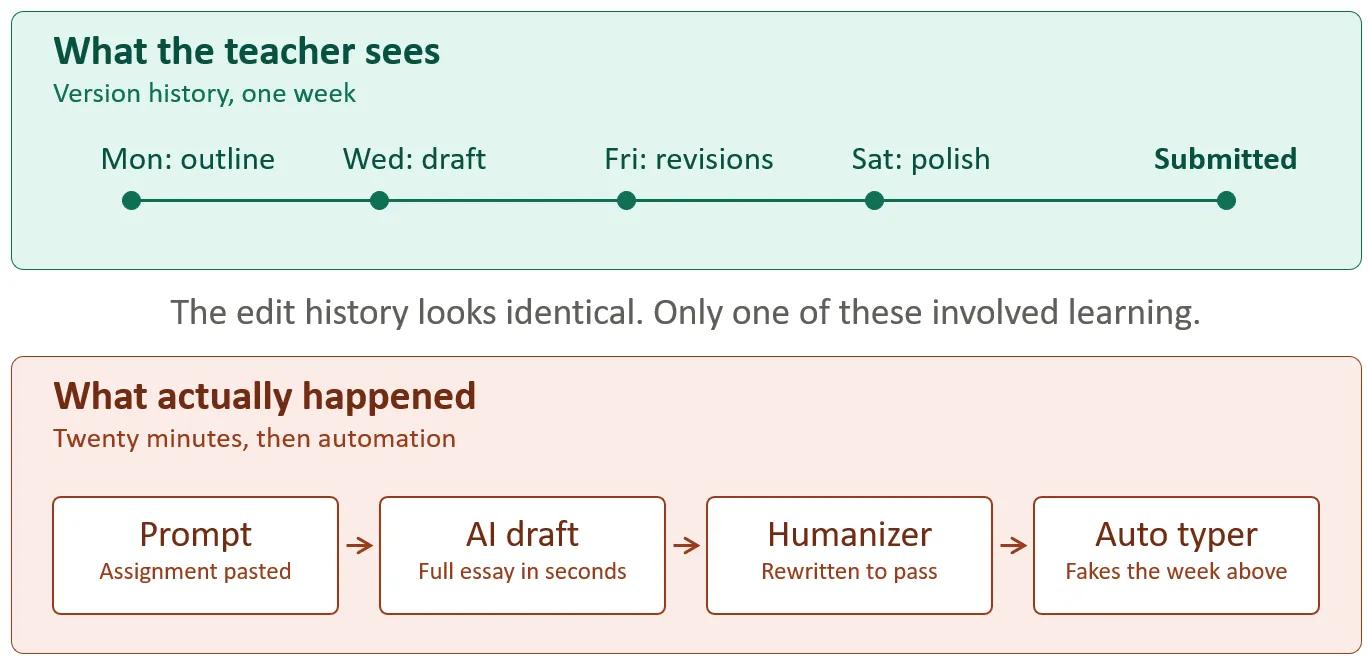
Modern cheating fakes the process, not just the final product
| Old cheating | Modern cheating |
|---|---|
| Copying homework from a friend | Using AI to write a full essay in minutes |
| Hidden notes during a test | Using a humanizer to make AI text look human |
| Turning in a paper someone else wrote | Automating discussion posts and reflections |
| Reusing an old assignment found online | Using tools that fake a normal writing timeline |
| Googling answers during an online quiz | Photographing questions for AI to solve instantly |
The difference matters. Old cheating copied a product. Modern cheating fakes the process, and the process is exactly the evidence teachers have started to rely on.
AI writing tools can support learning or replace it
The most obvious tool type is AI writing tools: chatbots, essay generators, rewriting tools, grammar tools, and citation generators. Students can use them to make outlines, write introductions, create thesis statements, or write the whole essay.
A student who asks AI “Can you explain this concept to me?” is doing something different from a student who asks “Write my essay for me.” One supports learning. The other replaces it.
The problem for teachers is that the final paper may not show the difference. A clean essay does not show whether the student worked through drafts, changed their ideas, and responded to feedback, or simply pasted in a polished answer. The final product can look fine even when the learning was skipped.
Humanizers are built to beat AI detectors
Paraphrasing and humanizing tools take AI-generated text and rewrite it to sound more natural and human. Their whole purpose is to protect the text from AI detectors.
So the question is no longer just whether a paper was written by AI. It is whether the paper was rewritten to hide that AI helped.
Some detection companies are trying to catch AI paraphrasing. Turnitin, a widely used academic integrity platform, says its AI writing detection is designed to spot text that may have come from AI, chatbots, or bypass tools. But the company also warns that the report can make mistakes. It can mark human writing as AI, or miss AI writing completely.
That warning matters. AI detection can be useful as one signal. But it cannot replace human judgment, context, and evidence of the student’s real progress.
Contract cheating is now a chain of tools, not a person
Contract cheating is not new. But AI has made it easier to do and easier to hide.
In the past, a student might pay a classmate or a stranger online to write a paper. Today the work can be spread across tools. A student might use one tool to brainstorm, another to draft, another to revise, and one more to make the result sound human.
Because the student touched each step, they may even feel like they did the assignment. But they skipped the thinking the assignment was designed to require: forming an argument, using evidence, building paragraphs, and responding to feedback.
This is process cheating in its clearest form. No single person secretly wrote the essay. The student handed over the meaningful parts of learning, one tool at a time. The final document sits in the student’s account, but the thinking is not the student’s.
AI can fake participation, not just essays
Cheating in 2026 is not limited to essays. In online classes, students post in discussion boards, reply to classmates, write reflections, and complete peer reviews. These assignments are meant to measure engagement.
AI can automate all of it. A student can paste a discussion prompt into a chatbot and be done in seconds. They can reply to classmates without reading the original post. They can paste a lecture video’s transcript into AI instead of watching the video, then generate a reflection on learning that never happened.
This creates a new problem for teachers. Participation can look active while being empty of real thinking. And that matters because participation is part of the learning. Students who fake it are not just skipping a task. They are skipping the interaction, reflection, and practice the task was meant to create.
Online tests have become copy-and-submit tasks
Exam cheating has changed too. Many tests are now online, and students have learned that AI can answer most questions in seconds.
On an unproctored online test, a student can copy a question into AI and get an answer almost instantly, especially for multiple choice. The quiz stops testing knowledge. It becomes a copy-and-submit task.
Even in-person testing on devices has gaps. Lockdown browsers and tab limits help, but students work around them with a second device, often a phone kept out of camera view. Once a question leaves the testing room, AI or a person outside can produce an answer right away.
The core issue is speed. A student no longer needs a prepared answer key. They only need a moment of access to the question.
This is not a made-up worry. In June 2026, a Brown University economics professor reported evidence that at least 50 students used AI to cheat on a take-home midterm. It was one of the largest known academic fraud cases in the university’s history. His response was to end take-home exams and return to proctored pen-and-paper testing. That retreat shows the real cost of an invisible process. When teachers cannot see how work was created, the only options left are blind trust or heavy monitoring.
Process simulation tools fake the writing timeline itself
One tool type deserves special attention. It targets the evidence teachers trust most: the document’s revision history.
A clear example is Duey.ai, which describes itself as an auto typer for Google Docs, Slides, and Word. Its cloud sessions can type a finished draft into a document over hours, days, or even months. The edit history spreads out the way a real writing process would.
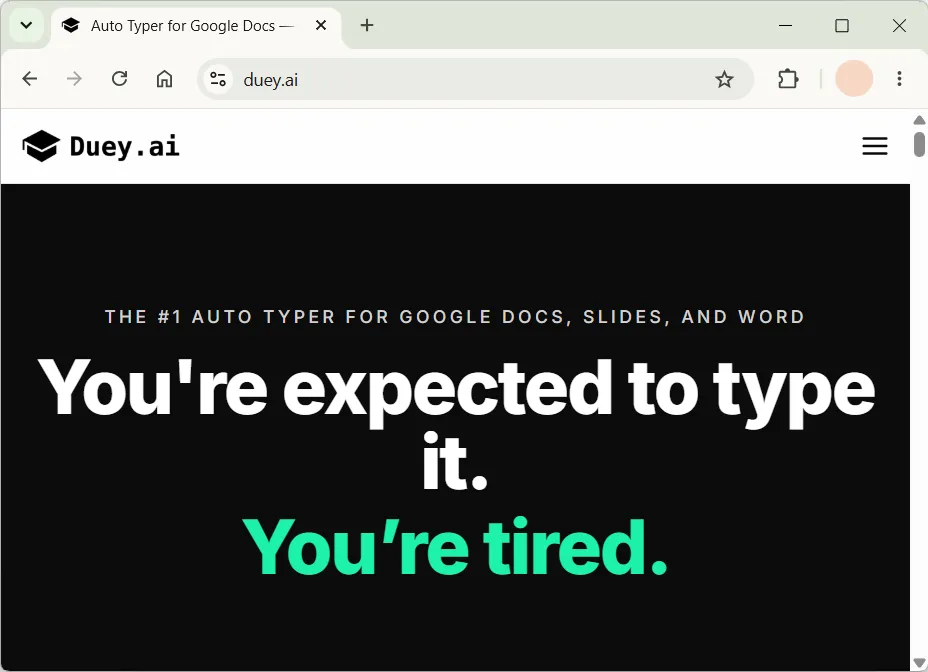
Teachers look at document history as evidence of a student’s process. If an essay was built up over time, with edits, that has usually meant the student wrote it. A tool like this breaks that assumption by faking it.
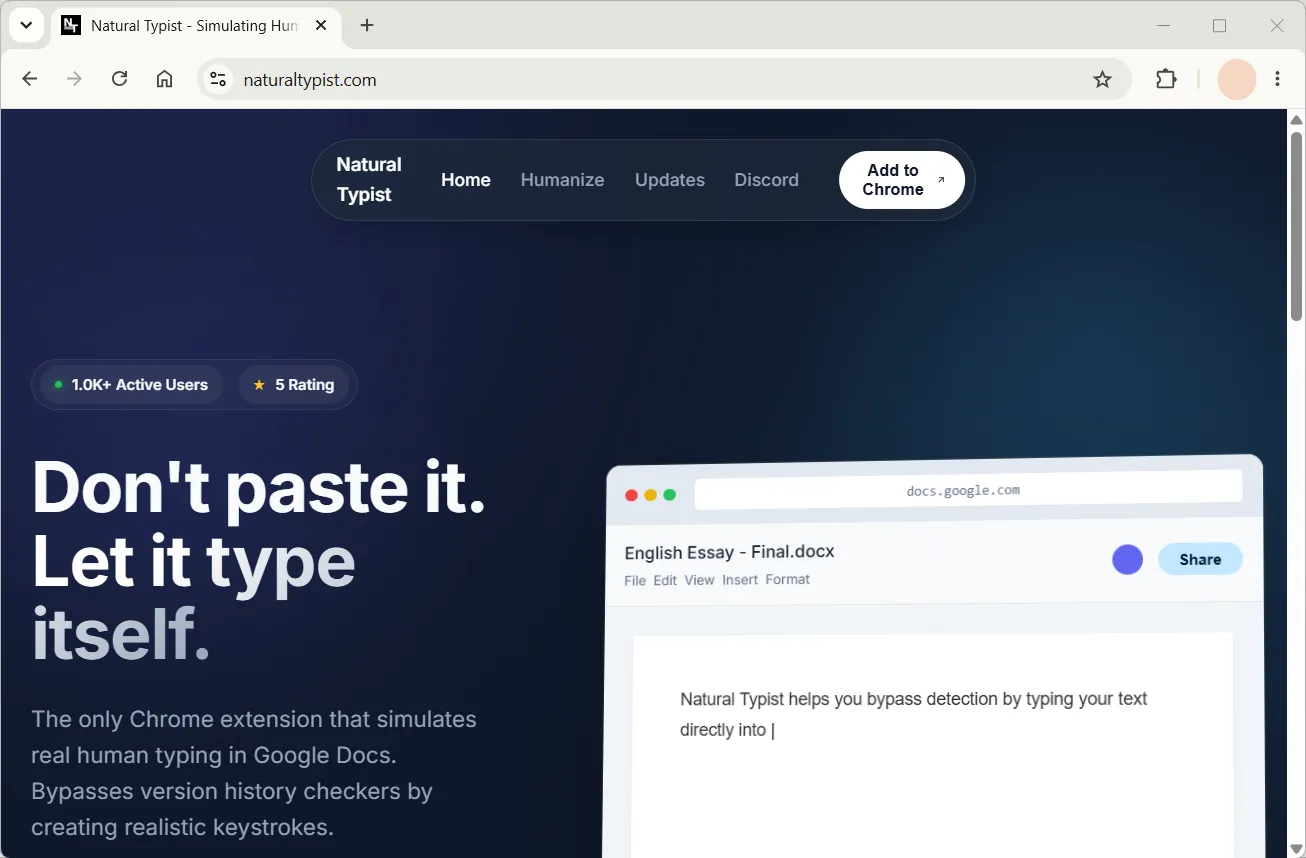
And Duey is not alone. Web tools like Dripwriter sell the same promise: paste a finished draft, pick a time window from ten minutes to a full week, and the text drips into the Google Doc on a schedule, complete with fake typos and revision-style edits, so the result looks naturally written. Browser extensions with names like Natural Typist sit openly in the Chrome Web Store, and some advertise that their output passes edit-history checkers as human typing. The newest tools go further. They let an AI agent write the text and then type it into the document itself. The entire path, from idea to real-looking revision history, can now run without the student doing anything at all.
This is not just an AI writing tool. It is a process performance. A student can create the appearance of a normal writing timeline without doing any of the work. Students can now fake not just the product, but the signs of effort and authorship themselves.
Better assignment design beats more monitoring
The first instinct is more monitoring. A better response is designing assignments that are harder to hand over to AI.
Academic integrity researchers have been making this case for a while. In The Opposite of Cheating (2025), Tricia Bertram Gallant and David Rettinger argue that the productive answer to AI is not more detection or monitoring. It is redesigning courses and assignments so that honest work becomes the easiest path.
Teachers can ask students to explain their reasoning out loud, show their in-between work, write short reflections in class, or apply ideas to situations from their own class or life. These approaches reward personal understanding rather than a final answer, and personal understanding is exactly what AI cannot supply for a student.
Teachers are not powerless
After all of this, it would be easy to think the tools have won. They have not. Two things give real reason for hope.
The first is available to any teacher right now, for free. Early in the term, have students write in class, typed, for about 20 minutes. Keep that session as a benchmark for the rest of the term. Tell students it exists and that it will be used to observe and reflect on how their process grows over the semester. This one move builds integrity into the course by default. Students know a reference point exists, and the teacher gains something no detector can provide: a real, shared sample of how each student actually writes. The framing matters, though. A benchmark works as a base for reflection and growth, not as a tool for accusing students, and students should hear it presented that way.
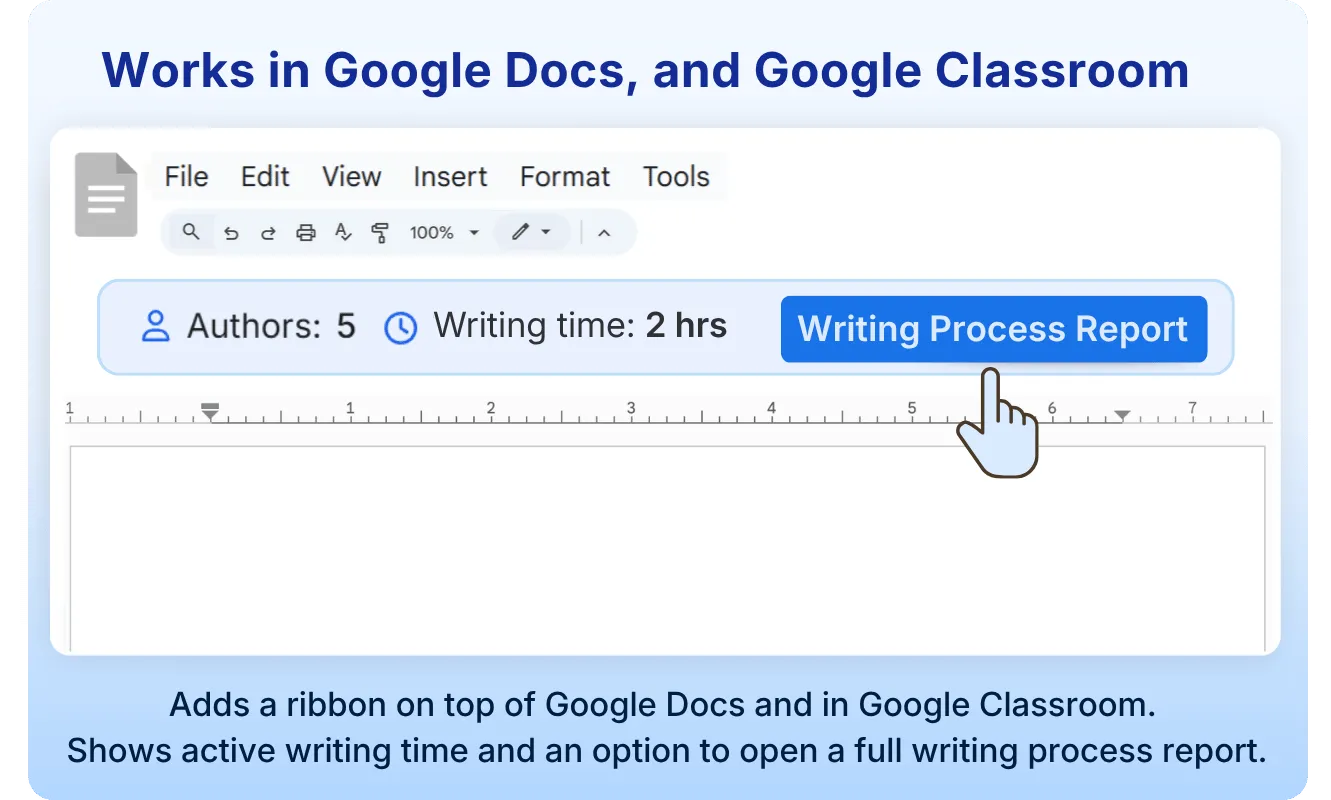
The second reason for hope is that the fight is less one-sided than it looks. Simulators can fake a typing rhythm. But a real writing process leaves a rich pattern of behavior: where edits happen, when ideas get reorganized, how revision unfolds across a session. Faking all of that consistently is much harder than generating believable text. This is where Process Feedback matters. It makes the learning process visible by showing how students drafted, revised, pasted, edited, and used AI along the way. Its team is also researching machine learning methods to tell real writing processes apart from fake ones. If these methods succeed, the same process data that shows a teacher how a student worked will also help expose a process that never happened.
Instead of asking “Was this written by AI?”, teachers can ask a better question: “How was this work created?” In 2026, protecting academic integrity means protecting the process of learning, not just the final product.
FAQ
What is process cheating? Process cheating means handing over the meaningful parts of learning, such as forming an argument, drafting, revising, and responding to feedback, while still turning in the work under your own name. The final product may pass every check even though the thinking was not the student’s.
Can AI detectors reliably catch AI-written work? No. Detection tools can flag possible AI use, but the companies that make them warn that results can be wrong about both human and AI writing, especially after paraphrasing tools are used. Detection is one signal, not proof.
What is an auto typer? An auto typer is a tool that types a finished draft into a document editor like Google Docs for the student, sometimes spread over days or weeks, so the revision history looks like natural writing. It fakes the writing process rather than the writing itself.
How can teachers respond without turning class into constant monitoring? Design assignments around visible thinking: spoken explanations, in-class writing, personalized prompts, and shown work. Pair that with tools that make the drafting and revision process visible, so honest effort is easy to show and hard to fake.
What can a teacher do right now, without any new tools? Run a short typed writing session in class, about 20 minutes, early in the term and keep it as a benchmark. Tell students it will be used to observe and reflect on how their writing process develops over the semester. It costs nothing, discourages process cheating through openness, and gives every later conversation an honest starting point.